

 EN
EN
Zirconia Crown vs Porcelain Crown: Differences & 2026 Prices
Key differences between zirconia and porcelain-fused-to-metal crowns: durability, aesthetics, lifespan and cost. Antalya 2026 price comparison at Emriva Dent Dental Clinic.
What Is a Zirconia Crown?
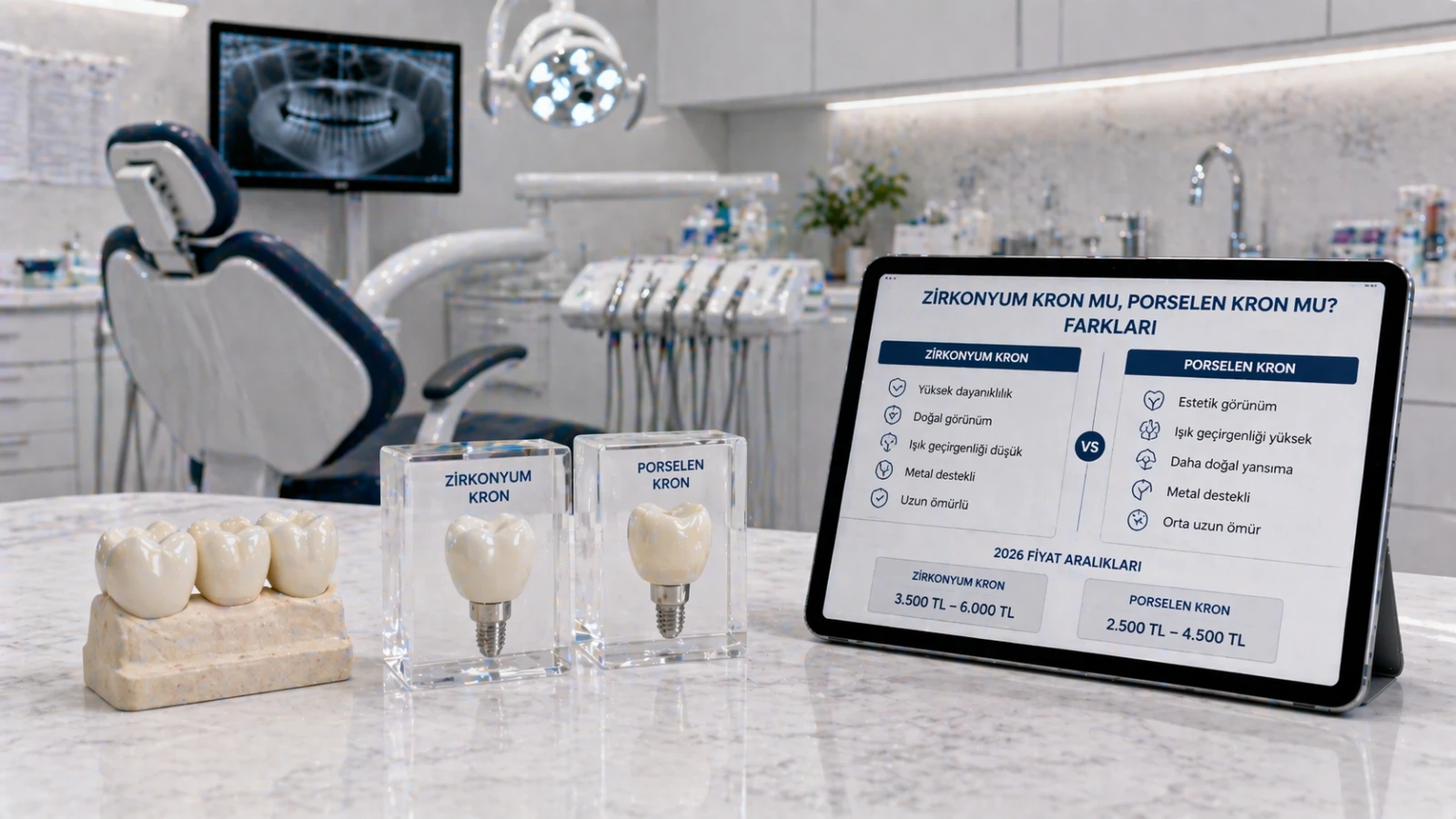
A zirconia crown is a dental prosthesis milled from zirconium dioxide (ZrO₂) using CAD/CAM technology. It contains no metal, transmits light like a natural tooth, and leaves no grey shadow at the gum line. At Emriva Dent Dental Clinic in Antalya, CE and ISO certified zirconia blocks are used.
What Is a Porcelain-Fused-to-Metal (PFM) Crown?
A traditional PFM crown is made by fusing porcelain over a metal substructure. Widely used for decades, this system has largely been replaced by zirconia. If the gum recedes over time, the metal base beneath may become visible.
What Is E.max (Lithium Disilicate)? How Does It Differ from Zirconia?
IPS e.max Press is a lithium disilicate glass-ceramic produced by Ivoclar Vivadent. It offers higher light translucency than zirconia, making it the preferred choice for front teeth. However, its strength (~400 MPa) is lower than zirconia; full zirconia is recommended for posterior teeth.
When Is Zirconia Preferred?
- Posterior tooth restoration (high chewing force)
- Implant superstructure
- Large bridge prostheses (3–4 units)
- Patients with metal allergies
How Many Sessions Does a Crown Take?
- Session 1: Tooth preparation and digital impression (intraoral scanner).
- Lab: CAD/CAM milling and sintering — 1–3 days.
- Session 2: Crown cementation and occlusion adjustment.
Thanks to Emriva Dent's digital workflow, some cases can be completed in a single day.
Combined packages are available for patients planning crowns alongside porcelain veneers or smile design. For crowns on implants, see our dental implant page.
Last updated: April 2026 — Emriva Dent Dental Clinic, Antalya